
How much we spend for our car
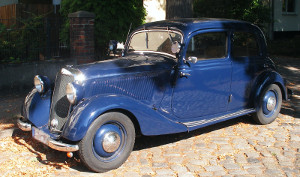
It is now widely known that it is wrong to compare trains, buses, and private cars by dividing the fuel costs by the number of kilometers driven and assuming that this is all there is to it. Even automobile clubs factor in the purchase price, insurance, tax, and depreciation over the vehicle's lifetime. Changing Cities now points out that all other costs must also be taken into account. Even when it comes to the statement "I'm faster by car", one should question the actual time spent.
We should also mention that investments in a "car-friendly" landscape and the health and climate impacts of private car traffic would also need to be factored in. Changing Cities has written about this elsewhere, so we'll skip over these costs for now...
Driving isn't worth it, my darling
On the website linked below, activists from the Clean Air Action Group in Hungary have done the following calculation: What if, in addition to travel time, we also factor in the total time spent on transportation? Many people underestimate how much driving costs them each month — financially, but ultimately also in terms of lifetime — and may therefore make the wrong decisions. With concrete figures at hand, you can talk to your colleagues or neighbors about what good mobility actually looks like.
We usually calculate travel speed as follows: the length of the distance traveled is divided by the travel time. For example, this gives us 50 km/h for a car. However, there are other factors to consider: the time you spend looking for a parking space; the time you spend taking the car to the garage; but above all, all the time you spend working (just) to finance your car, insurance, repairs, and fuel. The result is what we call "social speed": the total time you spend on transportation is divided by the distance traveled, and suddenly driving is not much faster than walking.
Social speed can be faster or slower: with four people in the car, we go faster. If we also factor in externalized costs (i.e., costs that are not paid by the person driving the car, but by society as a whole, e.g., for road infrastructure and accident consequences), then the car becomes significantly slower again.
The table (Excel) used in the article linked below can be downloaded, customized, and used for your own purposes, and one realizes that "progress" has not brought us much compared to the Stone Age man roaming the savannah ...
Read more https://cleancitiescampaign.org/research-list/driving-a-car-is-shockingly-slow/
Category[21]: Unsere Themen in der Presse Short-Link to this page: a-fsa.de/e/3N9
Link to this page: https://www.a-fsa.de/de/articles/9446-20260221-die-wirkliche-geschwindigkeit.htm
Link with Tor: http://a6pdp5vmmw4zm5tifrc3qo2pyz7mvnk4zzimpesnckvzinubzmioddad.onion/de/articles/9446-20260221-die-wirkliche-geschwindigkeit.htm
Tags: #Auto #Kfz #Vebrauch #Kosten #Allgemeinheit #Arbeit #Geschwindigkeit #Zeitverlust #Tabelle #Aufwandberechnen #ChangingCities
Created: 2026-02-21 06:16:02
Kommentar abgeben