
|

|



|
The Economics of Free Things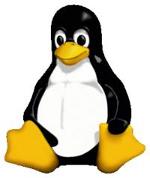
Amid the frenzy for ever-increasing production, ownership, and profit, a tiny seedling saw the light of day 35 years ago yesterday — one that vehemently resists being appropriated by individuals. The Linux operating system was announced by Linus Torvalds on August 25, 1991, in the newsgroup comp.os. minix with a "Hello World" as a free operating system. That little seed has since grown into a vital component of the Internet. It emerged from Richard Stallman’s GNU Project, which had been collecting free software for compilers, shells, and tools since 1983, and Linus Torvalds’ kernel, responsible for allocating processor time and memory, as well as communication between hardware and programs. All components are openly available and are reviewed, rejected, improved, and ultimately incorporated into the current version in collaboration with all interested parties. Everything Is a FileAccording to this principle, (almost) all settings in the configuration files are readable as text files and can be customized by users. Updates, too, are not natural disasters that befall the user; rather, they are announced, configurable, and selectable. Users can also choose the packages they want, allowing them to build a system tailored to their own preferences. I am because we are... is one of the translations of the South African Bantu word "Ubuntu," the most widely used Linux desktop distribution. It is also translated as "humanity" or "sense of community" and lays the foundation for a possible post-capitalist society. All packages are in the public domain and free to use and modify. Unlike material products or means of production, software does not become inferior through use and copying; rather, it actually improves, as it is tested more extensively and in new contexts. Generative AI perverts this ideaIt’s a mistake to assume that the AI systems currently offered by Big Tech provide all of us with the world’s knowledge for free through a similar model. On the contrary:
While free software like Linux may serve as a lifeline against capitalist exploitation, a free system cannot defeat Big Tech within our economic system. That is why even the free Linux GNU license had to be protected against attempts at privatized use. We recall that Google developed its Android mobile operating system on a modified Linux kernel and is earning billions from it. With the extended copyleft license, the GNU GPL, such abuse by Big Tech should at least result in financial losses. Let’s celebrate the 35th birthday of this now fully-grown penguin by using it at every opportunity and in every application — it’s like a Swiss Army knife and undemanding, so it can even run on old hardware ... Translated with DeepL.com (free version) Read more https://www.jungewelt.de/artikel/528907.software-happy-birthday-tux.html Category[21]: Unsere Themen in der Presse Short-Link to this page: a-fsa.de/e/3Ru Link to this page: https://www.a-fsa.de/de/articles/9635-20260826-linux-wird-35.html Link with Tor: http://a6pdp5vmmw4zm5tifrc3qo2pyz7mvnk4zzimpesnckvzinubzmioddad.onion/de/articles/9635-20260826-linux-wird-35.html Tags: #Linux #GNU #Geburtstag #LinusTorvalds #freieSoftware #Ubuntu #Menschlichkeit #Produktion #Besitz #Profit #BigTech #AI #KI #Copyleft #Lizenz #Gemeineigentum #Pinguin #SchweizerTaschenmesser #anpassbar Created: 2026-08-26 08:16:50 Hits: 390 Leave a Comment |
CC License Member in the European Civil Liberties Network Bundesfreiwilligendienst We don't store user data World Beyond War No use of JavaScript

|

|

|

|

|

|

|