
The Right to Anonymity?
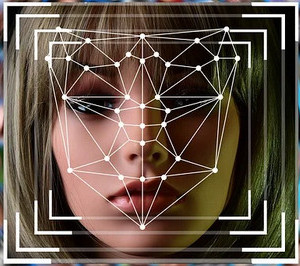
Time and again, we complain that it is no longer possible to use the Internet — and now even to go about our daily lives — anonymously. Yet privacy is one of our fundamental rights. While it may be understandable that banks want to see who is withdrawing money from their ATMs, there is no justification for unwarranted video surveillance on the streets and in public transportation. Time and again, we lament the resulting "false positives" — that is, people who are wrongly suspected. These individuals typically go through an ordeal that, in some cases, can drag on for days or months, or in the worst-case scenario, for the rest of their lives.
Here are a few examples
- AI Facial Recognition:
In March 2023, a man participated in a climate protest in Vienna; the police subsequently ran the images through an automated comparison with their central facial recognition database. Following an alleged match, a preliminary investigation was launched, which was later dropped. The individual only learned of this through a request for information and successfully filed a complaint with the data protection authority. - AI Facial Recognition II:
After cross-referencing images with their facial database, the Austrian police mistakenly identified a person with no criminal record as the leader of a criminal gang and had him arrested in Serbia by local authorities. He was forced to spend nearly two months in prison there before the false accusation was cleared up. - Google Pixel users entering the U.S.:
Last January, Samuel Tunick was returning to the U.S. from a vacation in the Dominican Republic. Upon entry, authorities wanted to inspect his smartphone for suspicious content. He used the feature of the alternative operating system GrapheneOS to delete the contents of his phone by entering a false PIN. He now faces charges in a U.S. court for this. However, he only deleted his own data, and according to Tunick’s lawyers, the authorities did not have a search warrant.
We know that the rule of law in the U.S. has been in a poor state at least since Trump took office, but even though Austria’s data protection authority is supporting the affected individuals in the first two cases, the security agencies are not willing to change their behavior; instead, they continue to insist on the use of AI-assisted facial recognition without cause.
Kommentar: RE: 20260730 Gibt es noch Privatsphäre?
Ich habe noch ein Beispiel für euch:
ine Tippfehler kostete einen Mann anderthalb Jahre Freiheit.
Der Kanadier Brandon Klayme wurde 2018 Opfer eines fatalen Irrtums. US-Behörden fahndeten wegen Kindesanbahnung über den Messenger Kik und gaben bei ihrer Anfrage an das Unternehmen versehentlich den Nutzernamen "fus_ro_dah" mit nur einem Unterstrich an. Der eigentliche Täter nutzte aber "fus__ro_dah" mit zwei Unterstrichen.
Kik lieferte daraufhin die Daten von Klayme, die US-Ermittler leiteten die IP-Adresse an die kanadische Polizei in Halifax weiter. Die Beamten durchsuchten Klaymes Wohnung und alle elektronischen Geräte – fanden aber absolut nichts. Keine Beweise, kein belastendes Material, nichts.
Trotzdem kam es 2024 zur Verurteilung. Das Gericht stützte sich ausschließlich auf die technische Zuordnung durch die Dienstanbieter. Weder Staatsanwaltschaft noch Verteidigung bemerkten während der Verhandlung die Abweichung im Benutzernamen. Klayme saß seine komplette Haftstrafe ab.
Erst bei der Vorbereitung der Berufungsschrift stolperte die Verteidigung über den fehlenden Unterstrich.
Jo., 01.08.26 09:38
Category[21]: Unsere Themen in der Presse Short-Link to this page: a-fsa.de/e/3R3
Link to this page: https://www.a-fsa.de/de/articles/9609-20260730-gibt-es-noch-privatsphaere.htm
Link with Tor: http://a6pdp5vmmw4zm5tifrc3qo2pyz7mvnk4zzimpesnckvzinubzmioddad.onion/de/articles/9609-20260730-gibt-es-noch-privatsphaere.htm
Tags: #Gesichtserkennung #AI #KI #Lauschangriff #Überwachung #Vorratsdatenspeicherung #Videoüberwachung #Verbraucherdatenschutz #Datensicherheit #Anonymität #Persönlichkeitsrecht #Privatsphäre #Smartphone #Handy #Android #Graphene
Created: 2026-07-30 07:58:20
Kommentar abgeben